IS SLOWER BETTER?
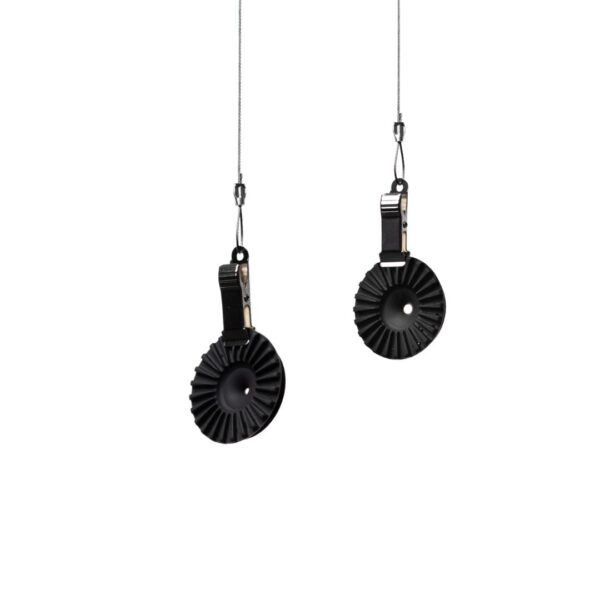
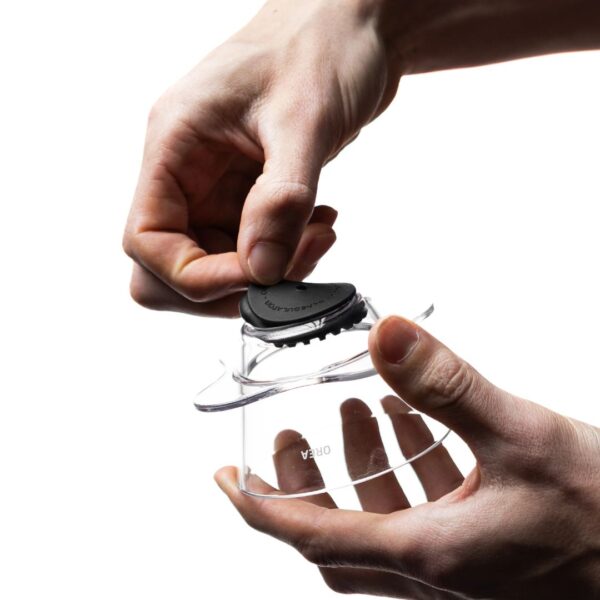
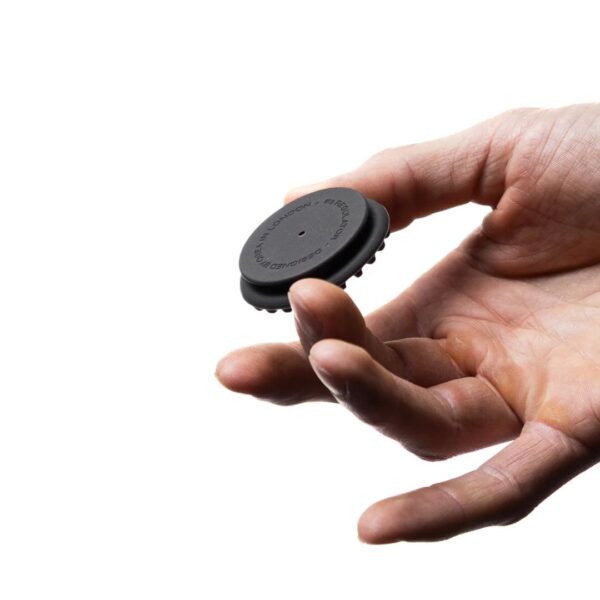
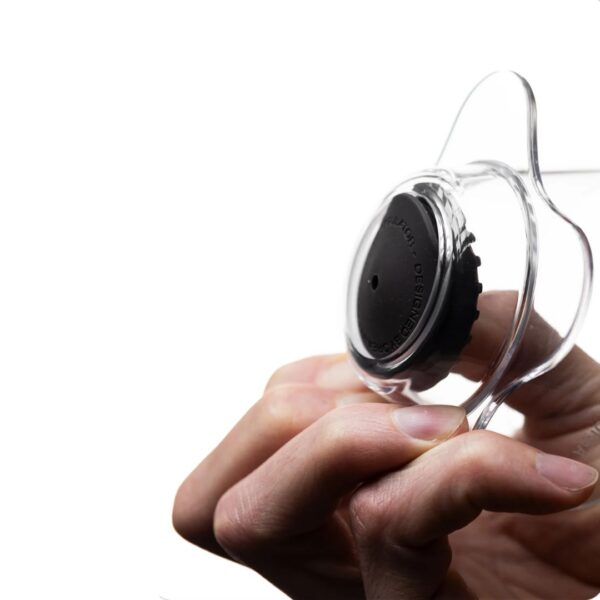
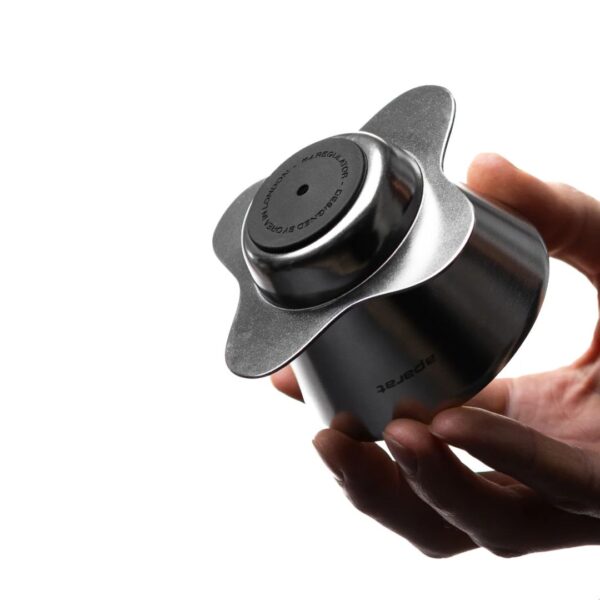
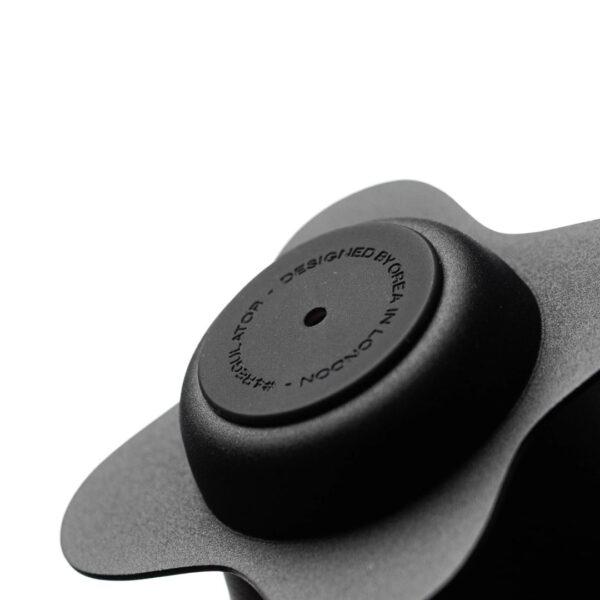
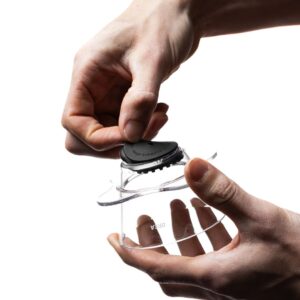
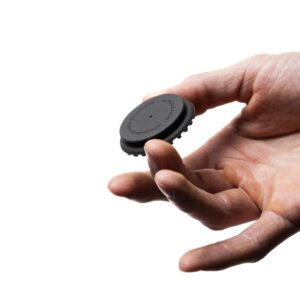
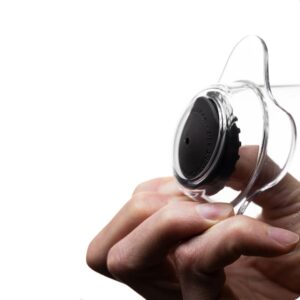
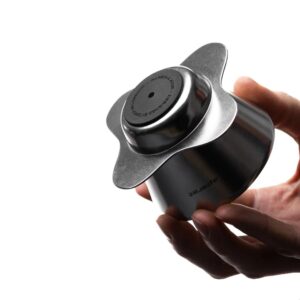
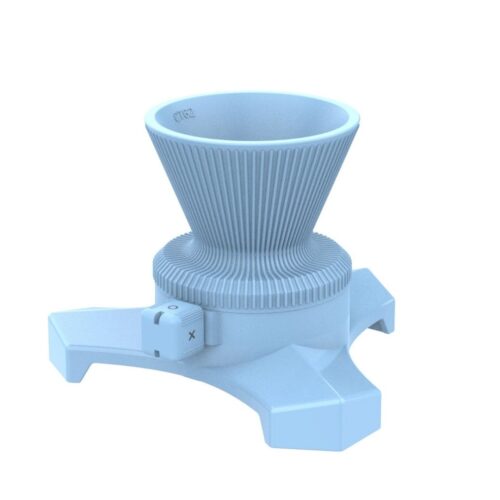
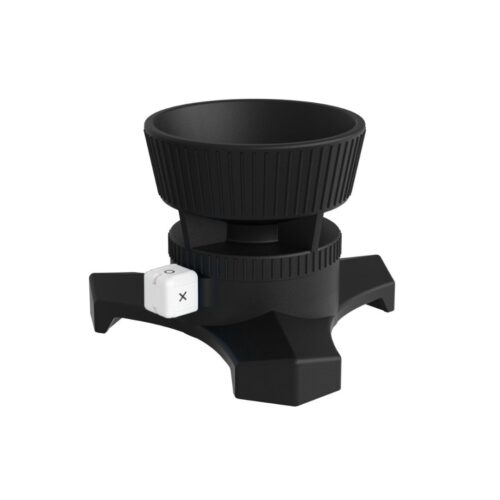
We know many of you will instinctively see a photo and think – “this is slow”. In fact, neither of these regulators (or any of our brewers) are slow. Traditionally, a slow brew resulted from clogging – not from the “size of the exit hole”. In fact, many brewers with “large openings” will flow slowly, and unpredictably, despite the large opening – because they are designed to fail and clog. Our designs are so efficient that we need to make comically sized openings to limit their flow rates significantly. And no – this is not happening because of “bypass”, it is achieved through efficient drainage.
Yes – each regulator will flow a bit slower than the other (#2 being the “slowest”, #4 the “medium”, and the #8 Switch regulator the “fastest”) but this is by design. The MAXIMUM flow rate enforces a MINIMUM contact time and forces one to grind coarser to hit the same brew times as with our faster bottoms. This can be very beneficial in many scenarios. Importantly – neither is slow, they are just slower than each other at the same parameters. If you want 2 minutes of contact time, you can achieve it on all of them, and they can all taste delicious, for the right coffee.
Some examples:
1. The super-soluble fast-flowing hyper-processed coffees will benefit from coarser grind sizes at the same contact time. We would use “slower” regulators so we can grind coarser and hit 2-2:30 contact time for a super clean, balanced, brew. This way we avoid the “funk/ferment” intensity at finer grind sizes for these coffees.
2. The ultra-light roasts can often benefit from more contact time at the same grind size. Contact time through motion, friction is more beneficial in this case than contact time through immersion. In this case we would use a “slower” regulator to achieve longer contact times. This helps avoid those empty, grassy brews.
3. In more developed roasts, going coarser will always taste better. But they are also the most soluble coffees, and in other brewers, going coarser means not getting enough contact time. Using the regulators ensures a minimum contact time while letting you grind coarser, with a clean, balanced result.
Yes – you can achieve this with slower paper filters. However, when you make a filter slower, you are adding additional filtration. This will change more than the contact time, it will thin the brew, it will remove more of what you may love. Controlling the output flow rate via the brewing device makes a lot more sense (as we do not increase filtration), and works hand-in-hand with great paper. Of course, experiment with paper – but don’t think that it gives you any control on contact time, as it introduces many other variables too.
COMPARISON
#2 Regulator: DARK GREY, “slowest” maximum flow rate.
#4 Regulator: BLACK, “medium” maximum flow rate
#8 Regulator: ORANGE, “fastest” maximum flow rate + Switch compatible
At the SAME grind size, recipe, you add 15-30 seconds of contact time as you go from FASTEST to SLOWEST regulator, depending on coffee. This additional contact will also predictably increase TDS at the SAME grind size. Yes, we highlighted that twice – because it is important.
Shipping
Payments & Shipping/Delivery Policies
The Coffee Folks accepts the following payment methods:
- Major credit card payments (additional 3% credit card fee)
- Stripe Payment
For more information regarding our payment terms, please view Payment Terms tab.
A PDF invoice will be sent via text/email upon confirmation of payment on the same day. This invoice is to be used as Proof of Purchase for warranty or exchange claims purposes.
The Coffee Folks guarantees same-day delivery (if order is made and payment received before 3pm on a working day) or the next available working day delivery (if order is made and payment received after 3pm). Delivery will be made via local couriers at a stipulated time period (Morning/Afternoon).
Special arrangements during off-working hours can be arranged beforehand at an additional cost.
Local Warranty
The Coffee Folks warrants the Product against defects in materials and/or workmanship for a period of 12 months from the date of delivery of the purchase. This is for products which are purchased directly through our store.
We will cover the cost to repair or replace at our own discretion, any product that is found wanting or defective in workmanship or materials.
Please take note the following are not covered:
- Modified Products
- Third Party Damage incurred during shipping, drops, abuse, spills,
- Inappropriate usage including commercial use on a home-designated item
- Overtime wear and tear due to usage of item
- Aesthetic blemishes when not affecting functionality of item
For warranty claims, please email us at thecoffeefolks.sg@gmail.com with the following items:
- Proof or Original Purchase Receipt
Returns
Return Policies
Return & Warranty Policy
Please review our Return & Warranty Policy carefully before making a purchase.
- Electrical Products
Electrical products are covered by a 1-year limited warranty from the date of purchase, unless otherwise stated.
Returns, exchanges, repairs, or replacements may be provided on a case-by-case basis if the product is found to be faulty or defective due to a manufacturing defect. (e.g there are no exchanges for buyers’ remorse)
The warranty does not cover damage or faults resulting from misuse, improper handling, accidental damage, normal wear and tear, improper maintenance, unauthorised modifications or repairs, or any damage caused by the user.
Proof of purchase may be required for all warranty claims. We also recommend keeping the original packaging and accessories to facilitate the warranty assessment process.
- Non-Electrical Products
All non-electrical products are non-returnable and non-exchangeable once purchased, except where the product is found to be defective at the time of purchase or where otherwise required by applicable law.
Change of Mind / Cancellation
For both electrical and non-electrical products, we do not accept returns, exchanges, or cancellations due to a change of mind, including but not limited to situations where the customer no longer wants or needs the product, has purchased the wrong item, or finds the same or a similar product at a lower price elsewhere.
Once an order has been confirmed and payment has been completed, the order is considered final and cannot be cancelled or refunded due to a change of mind, including before dispatch or delivery.
If you are unsure about a product, its compatibility, warranty coverage, or our return policy, please contact us before completing your purchase.
The Coffee Folks Singapore reserves the right to assess warranty, return, and exchange requests on a case-by-case basis, subject to applicable Singapore consumer protection laws.
![DragonFly Design Big CT62 Conical Dripper 02 Size 390ml [Blue]](https://thecoffeefolkssg.com/wp-content/uploads/2026/10/24-500x500.jpg "24")
Reviews
There are no reviews yet.